

Introduction
The way you start your morning often determines how the rest of your day unfolds. A healthy morning routine can improve your energy levels, boost productivity, enhance mental clarity, and support overall well-being. While many people begin their day by rushing through tasks, checking notifications, or skipping breakfast, these habits can lead to stress and reduced focus later in the day.
Creating a positive start does not require dramatic lifestyle changes. In fact, small and consistent actions can produce meaningful results over time. Whether you are a student, employee, entrepreneur, or homemaker, a structured morning routine can help you feel more organized and prepared for daily responsibilities.
Many successful individuals prioritize their mornings because they understand the value of intentional habits. Activities such as hydration, exercise, healthy eating, planning, and mindfulness can create momentum that lasts throughout the day. The key is finding a routine that matches your goals and lifestyle.
This guide explores what a healthy morning routine is, why it matters, how to build one step by step, its benefits and potential challenges, common mistakes to avoid, frequently asked questions, and expert recommendations for long-term success.
What is Healthy Morning Routine?

A healthy morning routine is a set of positive habits performed consistently after waking up. These habits are designed to improve physical health, mental well-being, productivity, and overall quality of life.
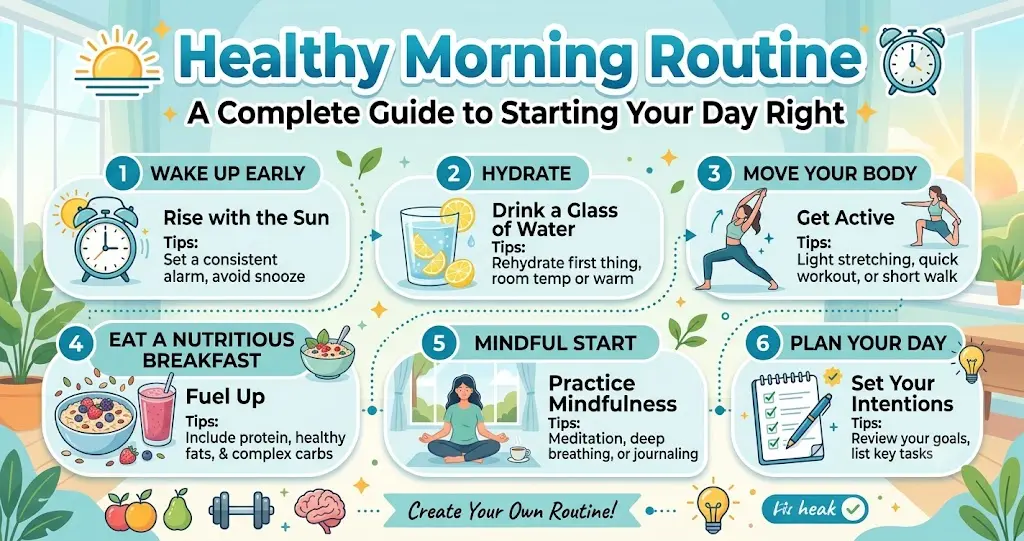
A morning routine may include activities such as:
- Drinking water
- Stretching or exercising
- Practicing mindfulness
- Eating a nutritious breakfast
- Planning daily tasks
- Reading or learning
The goal is to begin the day with intention rather than reacting to distractions or stress. A healthy morning routine creates structure and helps individuals feel more focused and prepared.
While every person’s routine may differ, the most effective routines support both physical and mental wellness.
Why is Healthy Morning Routine Important?

A healthy morning routine provides several important advantages that can positively impact daily life.
Improves Energy Levels
Healthy habits help the body wake up naturally and maintain energy throughout the day.
Enhances Focus
Starting the day with purpose improves concentration and mental clarity.
Reduces Stress
A structured routine creates a sense of control and reduces feelings of overwhelm.
Supports Physical Health
Exercise, hydration, and nutritious meals contribute to better overall health.
Increases Productivity
Planning and prioritizing tasks help individuals accomplish more efficiently.
Builds Positive Habits
Consistent morning actions often lead to healthier long-term behaviors.
These benefits make a healthy morning routine valuable for people of all ages and lifestyles.
Detailed Step-by-Step Guide
Step 1: Wake Up at a Consistent Time
Consistency helps regulate the body’s internal clock.
Try to wake up at the same time each day, including weekends when possible.
This habit can improve sleep quality and morning alertness.
Step 2: Drink Water Immediately
After several hours of sleep, the body needs hydration.
Drinking a glass of water in the morning can:
- Support metabolism
- Improve alertness
- Promote hydration
This simple habit is one of the easiest ways to start the day positively.
Step 3: Avoid Checking Your Phone Immediately
Many people begin their day by scrolling through messages and social media.
Instead, spend the first few minutes focusing on yourself and your goals.
This can reduce distractions and improve mental focus.
Step 4: Stretch or Exercise
Physical activity helps wake up the body and mind.
Options include:
- Walking
- Stretching
- Yoga
- Strength training
- Light cardio
Even ten to fifteen minutes of movement can make a difference.
Step 5: Practice Mindfulness
Mindfulness helps improve mental clarity and emotional balance.
Activities may include:
- Deep breathing
- Meditation
- Gratitude journaling
- Quiet reflection
These practices can help reduce stress and improve focus.
Step 6: Eat a Nutritious Breakfast
A healthy breakfast provides fuel for the day ahead.
Examples include:
- Oatmeal with fruit
- Eggs and vegetables
- Yogurt with nuts
- Whole-grain toast
Balanced meals help maintain steady energy levels.
Step 7: Review Your Goals
Take a few minutes to identify important priorities.
Ask yourself:
- What needs to be completed today?
- What is my top priority?
- What challenges might arise?
Planning improves organization and productivity.
Step 8: Learn Something New
Morning learning can stimulate the mind.
Consider:
- Reading a book
- Listening to educational content
- Studying a new skill
Continuous learning supports personal growth.
Step 9: Prepare for the Day
Organize your schedule, clothing, materials, or work items.
Preparation reduces stress and saves time later.
Step 10: Stay Consistent
Consistency is more important than perfection.
Small daily actions often produce better results than occasional major efforts.
Benefits of Healthy Morning Routine
Following a healthy morning routine offers many advantages.
- Increased energy
- Improved focus
- Better productivity
- Reduced stress
- Enhanced mood
- Better physical health
- Improved sleep quality
- Stronger self-discipline
- Greater motivation
- Better time management
- Increased confidence
- Improved emotional well-being
- Healthier lifestyle habits
- Better decision-making
- Greater life satisfaction
For example, individuals who begin their day with exercise and planning often report feeling more productive and organized throughout the day.
Disadvantages / Risks
Although beneficial, certain challenges may arise when building a routine.
- Difficulty maintaining consistency
- Early adjustment discomfort
- Time management challenges
- Unrealistic expectations
- Lack of motivation
- Overly complicated routines
- Sleep schedule disruptions
- Burnout from excessive activities
- Frustration from missed days
- Resistance to habit changes
These challenges can often be managed through gradual implementation and realistic planning.
Common Mistakes to Avoid
Many people struggle with morning routines because of avoidable mistakes.
Trying to Change Everything at Once
Introduce new habits gradually rather than making dramatic changes overnight.
Skipping Breakfast Regularly
Missing important nutrients may reduce energy and concentration.
Staying Up Too Late
A healthy morning often begins with healthy nighttime habits.
Using the Phone Excessively
Early distractions can reduce focus and productivity.
Creating an Unrealistic Schedule
A routine should be practical and sustainable.
Ignoring Physical Activity
Movement supports both mental and physical health.
Giving Up Too Quickly
Habit formation takes time and patience.
Comparing Your Routine to Others
Focus on creating a routine that works for your lifestyle and goals.
What is a healthy morning routine?
A healthy morning routine is a set of positive habits performed after waking up to support physical health, mental well-being, and productivity.
How long should a morning routine be?
The length varies depending on individual needs. Some people benefit from fifteen minutes, while others prefer an hour or more.
Is breakfast necessary in a healthy morning routine?
A nutritious breakfast can provide energy and support concentration, though individual preferences and dietary needs may differ.
Can exercise improve my mornings?
Yes. Exercise increases energy, improves mood, and helps prepare the body for daily activities.
How can I stay consistent?
Start with simple habits, maintain a regular schedule, and focus on gradual improvement.
What should I avoid in the morning?
Excessive screen time, skipping hydration, rushing, and neglecting planning are common habits worth avoiding.
Does a morning routine improve productivity?
Many people find that structured mornings improve focus, organization, and overall efficiency.
How long does it take to build a routine?
Habit formation varies, but consistency over several weeks often produces noticeable improvements.
Expert Tips & Bonus Points
Professionals who study habits and performance often recommend these additional strategies.
Prepare the Night Before
Lay out clothing, organize materials, and plan tasks in advance.
Prioritize Sleep
Quality sleep supports every aspect of a successful morning routine.
Focus on One Habit at a Time
Gradual changes are easier to maintain long term.
Practice Gratitude
Recognizing positive aspects of life can improve mood and mindset.
Keep Your Environment Organized
A clean space reduces distractions and stress.
Track Your Progress
Monitoring habits helps identify improvements and challenges.
Be Flexible
Life circumstances change, so adapt your routine when necessary.
Celebrate Small Wins
Acknowledging progress helps maintain motivation.
Stay Active
Regular movement supports both physical and mental health.
Make It Enjoyable
Choose habits you genuinely enjoy to increase consistency.
Conclusion
A healthy morning routine can be one of the most effective ways to improve overall well-being, productivity, and quality of life. By starting the day with positive habits such as hydration, movement, mindfulness, healthy eating, and planning, individuals can create a strong foundation for success. These simple actions may seem small, but their cumulative impact can be significant over time.
Throughout this guide, we explored the meaning of a healthy morning routine, why it is important, practical steps for implementation, key benefits, potential challenges, common mistakes, frequently asked questions, and expert recommendations. These insights demonstrate that successful mornings are built through consistency rather than perfection.
Every person has unique goals, schedules, and responsibilities. Therefore, the best routine is one that fits your lifestyle and can be maintained consistently. By making gradual improvements and staying committed to positive habits, you can create a morning routine that supports long-term health, happiness, and productivity.
The journey toward a better day begins with the choices made each morning. Start small, remain consistent, and allow healthy habits to become a natural part of your daily life.
