

Introduction
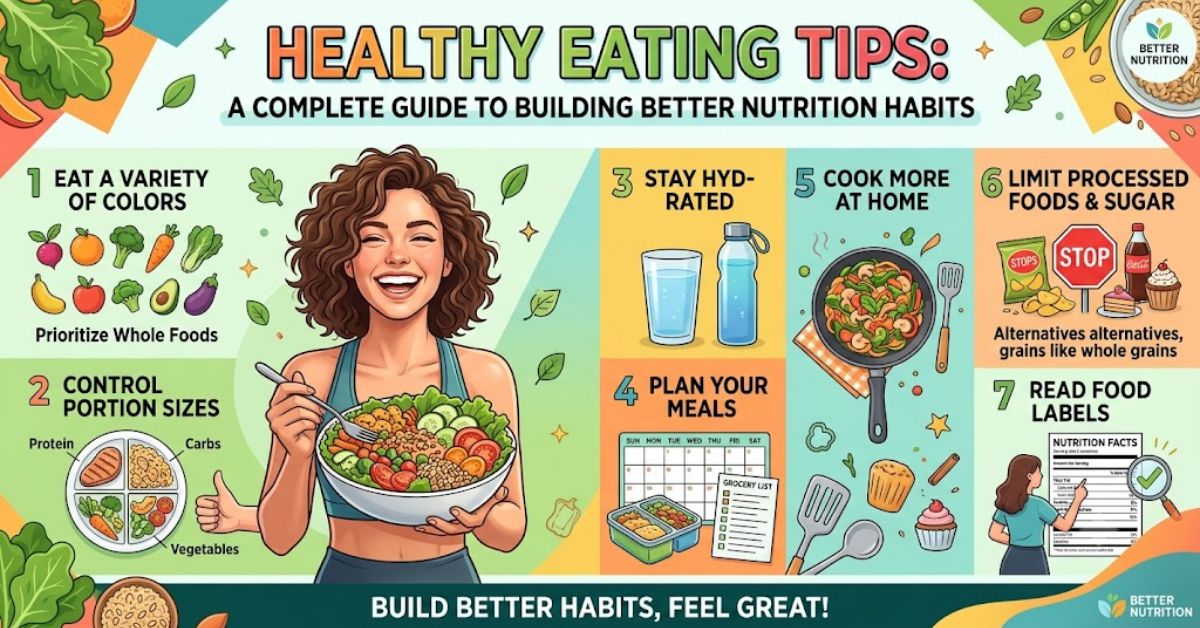
Healthy eating is one of the most important foundations of a healthy and active lifestyle. The foods you choose every day have a direct impact on your energy levels, physical health, mental well-being, and overall quality of life. While many people believe that eating healthy requires expensive ingredients or strict diets, the truth is much simpler. Small, consistent changes in your daily food choices can make a significant difference over time.
Whether your goal is to lose weight, improve your fitness, reduce the risk of chronic diseases, or simply feel more energetic, following healthy eating tips can help you achieve sustainable results. Instead of chasing quick-fix diets, it’s far more effective to develop eating habits that you can maintain for years.
Healthy eating is about balance, moderation, and variety. It includes consuming nutrient-rich foods such as fruits, vegetables, whole grains, lean proteins, healthy fats, and staying properly hydrated. At the same time, limiting processed foods, excessive sugar, unhealthy fats, and high-sodium meals supports better long-term health.
In this complete guide, you’ll discover practical healthy eating tips that are easy to understand and apply. Whether you’re a beginner looking to improve your diet or someone who already has basic nutrition knowledge, this guide will help you make smarter food choices and build lifelong healthy habits.
What Is Healthy Eating?

Healthy eating means consuming a balanced variety of foods that provide your body with the nutrients it needs to function properly. Rather than following restrictive diets or eliminating entire food groups, healthy eating focuses on nourishing your body while enjoying food in moderation.
A healthy eating pattern generally includes:
- Fresh fruits and vegetables
- Whole grains
- Lean proteins
- Healthy fats
- Low-fat dairy products or suitable alternatives
- Plenty of water
At the same time, healthy eating involves reducing foods that are high in added sugar, unhealthy fats, and excessive sodium.
For example, choosing grilled chicken instead of fried chicken, replacing sugary drinks with water, or eating brown rice instead of refined white rice are simple yet effective ways to improve your daily nutrition.
Healthy eating also means paying attention to portion sizes, eating meals at regular intervals, and avoiding overeating. These habits contribute to better digestion, stable blood sugar levels, and a healthier body weight.
Why Is Healthy Eating Important?
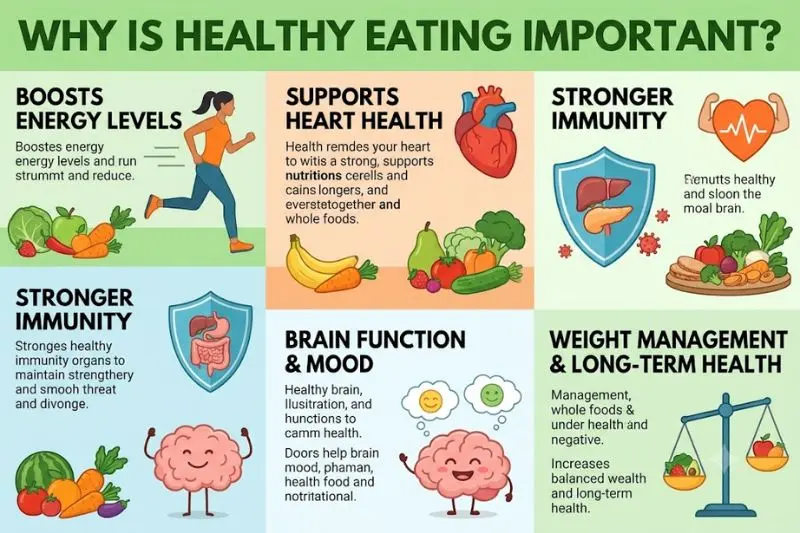
Healthy eating plays a vital role in maintaining both physical and mental health. Every cell, organ, and system in your body depends on essential nutrients to function efficiently. Poor eating habits may not cause immediate problems, but over time they can increase the risk of obesity, heart disease, type 2 diabetes, high blood pressure, and other chronic illnesses.
Following healthy eating tips can help you:
- Maintain a healthy body weight.
- Increase daily energy levels.
- Strengthen your immune system.
- Improve concentration and mental focus.
- Support healthy digestion.
- Build stronger bones and muscles.
- Reduce the risk of chronic diseases.
- Improve sleep quality and overall well-being.
Healthy eating isn’t about perfection. It’s about making better choices consistently, allowing your body to perform at its best every day.
Step-by-Step Guide to Healthy Eating
Step 1: Build a Balanced Plate
Creating balanced meals is one of the easiest ways to improve your eating habits. Every meal should include a combination of carbohydrates, protein, healthy fats, and vegetables.
A simple balanced plate looks like this:
- 50% vegetables and fruits
- 25% whole grains
- 25% lean protein
- A small portion of healthy fats
For example, a healthy lunch might include grilled chicken breast, brown rice, steamed broccoli, mixed vegetables, and a few slices of avocado.
Step 2: Eat More Fruits and Vegetables
Fruits and vegetables are among the most nutrient-dense foods available. They provide vitamins, minerals, antioxidants, and dietary fiber that help protect your body from disease while supporting healthy digestion.
Aim to fill at least half of your plate with colorful fruits and vegetables every day. Different colors provide different nutrients, so eating a wide variety offers the greatest health benefits.
Excellent choices include:
- Apples
- Bananas
- Oranges
- Blueberries
- Spinach
- Broccoli
- Carrots
- Tomatoes
- Bell peppers
- Cucumbers
Fresh, frozen, and minimally processed vegetables can all be part of a healthy diet, making it easier to maintain healthy eating habits throughout the year.
Step 3: Choose Whole Grains Over Refined Grains
Whole grains are an excellent source of fiber, vitamins, minerals, and complex carbohydrates that provide steady energy throughout the day. Unlike refined grains, whole grains retain all parts of the grain, making them far more nutritious.
Good whole-grain options include:
- Brown rice
- Oats
- Whole wheat bread
- Whole wheat pasta
- Quinoa
- Barley
For example, replacing white bread with whole wheat bread or choosing oatmeal instead of sugary breakfast cereals can significantly improve your daily nutrition.
Step 4: Include Lean Protein in Every Meal
Protein is essential for building muscles, repairing tissues, and keeping you full for longer periods. Choosing lean protein sources helps reduce unnecessary saturated fat while providing important nutrients.
Healthy protein sources include:
- Skinless chicken
- Fish
- Eggs
- Beans
- Lentils
- Chickpeas
- Tofu
- Greek yogurt
- Low-fat cottage cheese
Including protein in every meal can also help reduce unhealthy snacking between meals.
Step 5: Choose Healthy Fats
Not all fats are harmful. Healthy fats support brain function, hormone production, and heart health.
Excellent sources of healthy fats include:
- Avocados
- Olive oil
- Nuts
- Seeds
- Fatty fish such as salmon and sardines
Limit foods that contain trans fats and excessive saturated fats, including deep-fried foods and heavily processed snacks.
Step 6: Stay Hydrated
Water is essential for almost every function in the body. Proper hydration supports digestion, regulates body temperature, transports nutrients, and helps maintain healthy skin.
Simple hydration tips include:
- Drink water throughout the day.
- Carry a reusable water bottle.
- Drink a glass of water before meals.
- Replace sugary beverages with water or unsweetened drinks.
Many people mistake thirst for hunger, leading to unnecessary eating.
Step 7: Control Portion Sizes
Even healthy foods can contribute to weight gain if eaten in excessive amounts. Learning proper portion control helps prevent overeating without eliminating your favorite foods.
Ways to manage portion sizes include:
- Use smaller plates.
- Eat slowly.
- Stop eating when comfortably full.
- Avoid eating directly from large packages.
- Read nutrition labels to understand serving sizes.
Mindful eating can make portion control much easier.
Step 8: Reduce Added Sugar
Too much added sugar can increase the risk of obesity, type 2 diabetes, and heart disease.
Common sources include:
- Soft drinks
- Candy
- Cakes
- Cookies
- Sweetened coffee drinks
- Packaged desserts
Instead, satisfy your sweet cravings with fresh fruits or plain yogurt topped with berries.
Step 9: Limit Processed Foods
Highly processed foods often contain excessive salt, sugar, preservatives, and unhealthy fats while offering little nutritional value.
Examples include:
- Potato chips
- Instant noodles
- Processed meats
- Frozen fast food
- Sugary breakfast cereals
Whenever possible, prepare meals at home using fresh ingredients.
Step 10: Plan Your Meals
Meal planning reduces unhealthy food choices and helps maintain consistent eating habits.
Simple meal-planning tips include:
- Create a weekly menu.
- Prepare a shopping list.
- Cook meals in advance.
- Store healthy snacks for busy days.
- Keep nutritious ingredients readily available.
Planning ahead makes healthy eating much easier, especially during busy workweeks.
Benefits of Healthy Eating
Following healthy eating habits offers numerous physical and mental health benefits.
- Supports healthy weight management.
- Improves heart health.
- Reduces the risk of diabetes.
- Strengthens the immune system.
- Provides long-lasting energy.
- Improves digestion.
- Promotes healthier skin and hair.
- Enhances concentration and memory.
- Supports stronger bones and muscles.
- Increases overall life expectancy.
Healthy eating also contributes to better emotional well-being by helping stabilize blood sugar levels and supporting brain health.
Disadvantages / Risks of Healthy Eating
Healthy eating has very few disadvantages. However, certain challenges may arise if it is approached incorrectly.
- Healthy foods may seem more expensive initially.
- Meal preparation requires planning and time.
- Extremely restrictive diets can lead to nutrient deficiencies.
- Following food trends without proper knowledge may create unhealthy habits.
- Eliminating entire food groups without medical advice can affect overall nutrition.
The key is maintaining balance rather than pursuing perfection.
Common Mistakes to Avoid
Many people unknowingly make mistakes that reduce the effectiveness of healthy eating.
Avoid these common errors:
- Skipping breakfast regularly.
- Drinking too many sugary beverages.
- Eating large portion sizes.
- Depending heavily on processed foods.
- Ignoring food labels.
- Eating too quickly.
- Following fad diets.
- Not drinking enough water.
- Completely avoiding healthy fats.
- Expecting instant results instead of long-term progress.
Building healthy habits takes patience and consistency.
(FAQs)
What are the most important healthy eating tips for beginners?
If you’re just starting your healthy eating journey, focus on simple and sustainable habits rather than making drastic changes. Start by eating more fruits and vegetables, drinking enough water, choosing whole grains, and including lean protein in your meals. Limiting sugary drinks and processed foods can also make a significant difference. Remember, consistency is more important than perfection.
How many meals should I eat each day?
There is no universal rule for the number of meals you should eat. Some people feel better eating three balanced meals a day, while others prefer three meals with one or two healthy snacks. The key is to listen to your body’s hunger signals and avoid overeating.
Can healthy eating help with weight loss?
Yes. Healthy eating is one of the most effective ways to achieve and maintain a healthy weight. A balanced diet rich in vegetables, fruits, lean proteins, whole grains, and healthy fats helps control hunger while providing essential nutrients. Combined with regular physical activity, healthy eating supports gradual and sustainable weight loss.
Are carbohydrates unhealthy?
No. Carbohydrates are an important source of energy. The key is choosing complex carbohydrates instead of refined ones. Foods such as brown rice, oats, whole wheat bread, quinoa, and sweet potatoes provide fiber and essential nutrients, making them healthier choices than sugary snacks or refined white bread.
Is it okay to enjoy treats while eating healthy?
Absolutely. Healthy eating is about balance, not restriction. Enjoying your favorite dessert or snack occasionally is perfectly acceptable as long as it fits within an overall balanced diet. Completely eliminating your favorite foods may make healthy eating difficult to maintain over the long term.
How can I maintain healthy eating habits when I have a busy schedule?
Planning ahead is the best solution. Prepare meals in advance, keep healthy snacks available, carry a reusable water bottle, and create a weekly grocery list. Having nutritious options ready makes it much easier to avoid unhealthy fast food when you’re busy.
How much water should I drink every day?
Water needs vary depending on age, activity level, climate, and overall health. A common recommendation is around 8 glasses (about 2 liters) per day, but some people may require more. Drinking water regularly throughout the day and paying attention to your thirst are good habits to follow.
Expert Tips & Bonus Points
If you want to make healthy eating a permanent lifestyle rather than a temporary habit, consider these expert recommendations:
- Focus on progress instead of perfection.
- Read nutrition labels before purchasing packaged foods.
- Fill half of your plate with vegetables at every meal.
- Eat slowly and enjoy every bite.
- Avoid grocery shopping when you’re hungry.
- Prepare healthy meals at home whenever possible.
- Choose seasonal fruits and vegetables for better taste and value.
- Keep healthy snacks such as nuts, yogurt, or fruit within easy reach.
- Get enough sleep, as poor sleep often leads to unhealthy food cravings.
- Combine healthy eating with regular exercise for the best long-term results.
Bonus Points
- Practice mindful eating by avoiding distractions such as television or mobile phones during meals.
- Try one new healthy recipe each week to keep your meals interesting.
- Don’t skip meals, especially breakfast, as it may lead to overeating later in the day.
- Celebrate small improvements instead of aiming for perfection from day one.
Developing healthy eating habits is a lifelong journey. Small improvements made consistently often produce better results than drastic short-term changes.
Conclusion
Healthy eating is not about following strict diets or giving up all your favorite foods. Instead, it is about making smarter food choices that nourish your body, improve your energy levels, and support long-term health. By focusing on balanced meals, choosing whole foods, staying hydrated, controlling portion sizes, and limiting processed foods, anyone can build healthier eating habits that last a lifetime.
The best part about healthy eating is that it doesn’t require perfection. Every healthy choice you make, no matter how small, contributes to your overall well-being. Whether it’s replacing sugary drinks with water, adding more vegetables to your meals, or preparing home-cooked food more often, these simple actions can create meaningful improvements over time.
Remember that lasting success comes from consistency rather than quick fixes. Healthy eating should be enjoyable, flexible, and suitable for your lifestyle. Instead of aiming for dramatic overnight changes, focus on making one positive improvement at a time.
By applying the healthy eating tips shared in this guide, you’ll be well on your way to developing better nutrition habits, improving your physical and mental health, and enjoying a healthier, more active life for years to come. Start today, stay consistent, and let every healthy meal bring you one step closer to your wellness goals.
