

Introduction
E-commerce business has become one of the most powerful ways to build income and long-term financial independence in today’s digital world. With increasing internet access and global digital transformation, buying and selling products online has turned into a normal part of everyday life. This shift has opened doors for entrepreneurs who want to start a business with low investment and high growth potential.
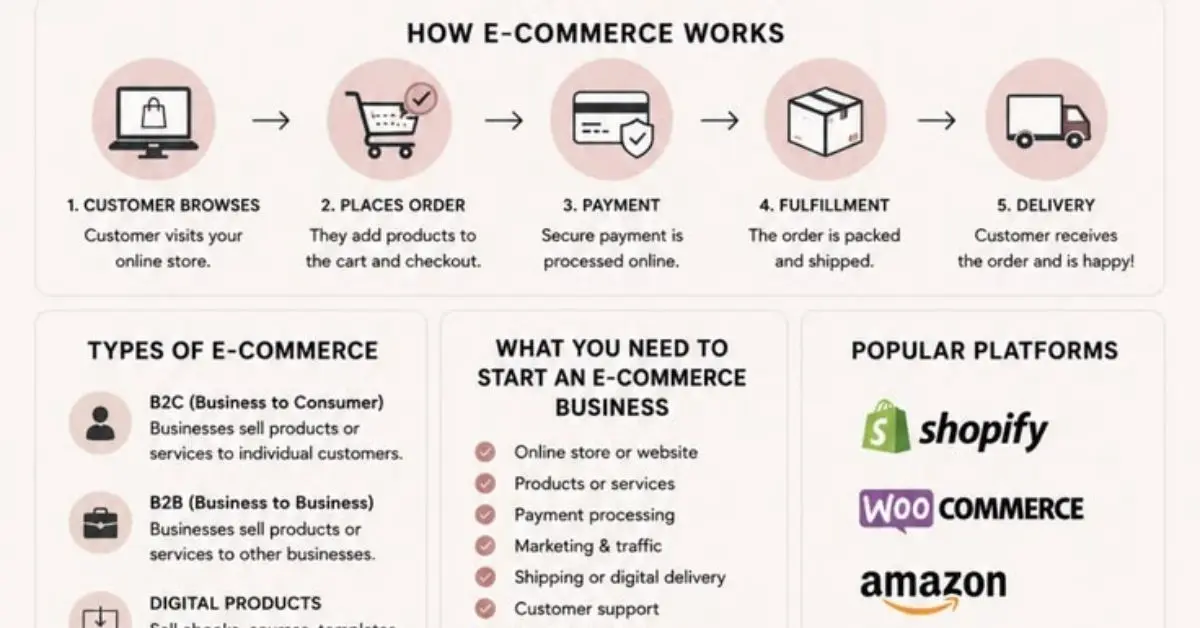
In simple terms, an e-commerce business allows you to sell products or services through online platforms without needing a physical store. Customers can browse products, compare prices, place orders, and receive deliveries at their doorstep. This convenience has made online shopping one of the fastest-growing industries worldwide.
What makes e-commerce even more attractive is its flexibility. You can run your business from home, scale it globally, and automate many processes using digital tools. However, success does not come automatically. It requires planning, strategy, research, and consistent execution.
Many beginners enter this field with high expectations but little understanding of how the system works. As a result, they struggle with product selection, marketing, and customer retention. This guide is designed to remove that confusion and provide a clear, step-by-step roadmap.
By the end of this article, you will understand how to start, manage, and grow a successful e-commerce business using practical strategies that work in real-world scenarios.
What is E-commerce Business Guide?
An e-commerce business guide is a structured framework that explains how online selling works and how entrepreneurs can build successful digital stores from scratch. It simplifies complex processes like product sourcing, website creation, payment integration, and digital marketing into easy-to-follow steps.
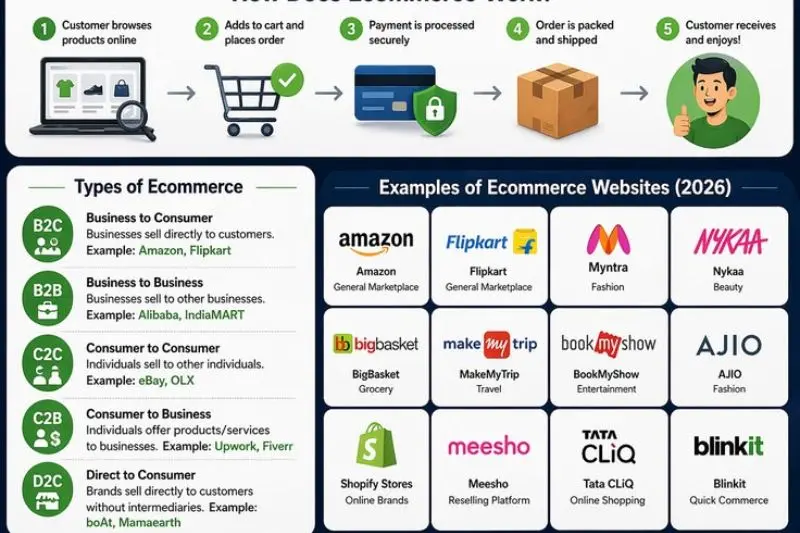
E-commerce itself refers to the buying and selling of goods or services over the internet. It includes multiple business models such as business-to-consumer (B2C), business-to-business (B2B), consumer-to-consumer (C2C), and dropshipping models. Each model has different requirements, profit margins, and operational structures.
A complete e-commerce business guide helps beginners understand these models and choose the one that best fits their goals. It also provides insights into tools, platforms, and strategies needed to operate efficiently in a competitive digital marketplace.
In addition, such a guide explains how to handle logistics, manage inventory, and build customer trust. Since online competition is high, understanding these fundamentals is essential for long-term success.
Why is E-commerce Business Guide Important?
An e-commerce business guide is important because it provides clarity in an industry that can often feel overwhelming for beginners. Without proper direction, new entrepreneurs may waste time, money, and effort on ineffective strategies.
One of the biggest advantages of having a structured guide is that it reduces trial and error. Instead of guessing what works, you follow proven steps that increase your chances of success.
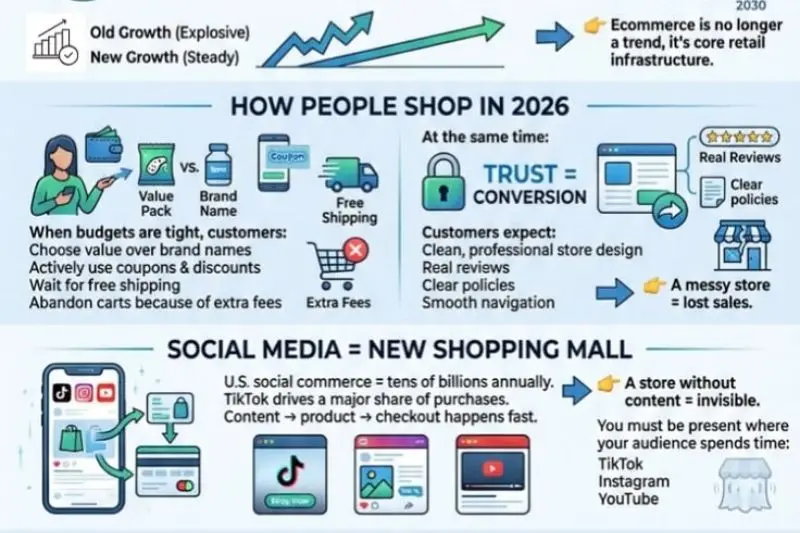
It also helps you understand customer behavior, which is critical in online business. Knowing what customers want, how they search for products, and what influences their buying decisions allows you to create better marketing strategies.
Another important factor is competition. The e-commerce industry is highly competitive, and without proper knowledge, it is easy to get lost. A good guide helps you identify profitable niches, build strong branding, and position your store effectively.
Ultimately, an e-commerce business guide acts as a roadmap that saves time, reduces risks, and improves decision-making for beginners and intermediate entrepreneurs alike.
Detailed Step-by-Step Guide
Step 1: Choose a Profitable Niche
The first step in building an e-commerce business is selecting a niche. A niche is a specific category of products you want to sell, such as fashion, electronics, or fitness products.
Choosing the right niche is important because it determines your target audience and competition level. A focused niche allows you to build stronger branding and attract loyal customers.
Step 2: Conduct Market Research
After selecting a niche, you need to research market demand. This involves analyzing competitors, identifying trending products, and understanding customer needs.
Market research helps you avoid selling products that have low demand or high competition without differentiation.
Step 3: Source Your Products
There are several ways to source products for your e-commerce business. You can work with wholesalers, manufacturers, or use dropshipping suppliers.
Each method has its pros and cons. Dropshipping requires low investment, while wholesale buying offers higher profit margins.
Step 4: Build Your Online Store
Next, you need to create your online store using platforms like Shopify or WooCommerce. Your website should be simple, mobile-friendly, and easy to navigate.
A well-designed store builds trust and improves customer experience, which directly impacts sales.
Step 5: Set Up Payment and Shipping Systems
Secure payment gateways are essential for customer trust. You should offer multiple payment options for convenience.
Shipping systems should also be reliable and fast to ensure customer satisfaction and repeat purchases.
Step 6: Launch Marketing Campaigns
Marketing is the backbone of any e-commerce business. You can use social media marketing, search engine optimization, and paid advertising to attract customers.
Without marketing, even the best products will not generate sales.
Step 7: Optimize and Scale
Once your store is running, focus on analyzing performance and improving weak areas. Scaling involves expanding product lines, increasing traffic, and improving conversion rates.
Benefits of E-commerce Business Guide
- Provides clear step-by-step direction for beginners
- Reduces risk of business failure
- Helps identify profitable niches and products
- Improves marketing and customer targeting strategies
- Saves time by avoiding trial and error
- Supports long-term business growth
- Enhances decision-making with structured knowledge
Disadvantages / Risks
- High competition in most niches
- Requires continuous marketing efforts
- Dependence on third-party platforms and tools
- Shipping delays can affect customer satisfaction
- Technical challenges for beginners
- Profit margins may vary depending on model
Common Mistakes to Avoid
Many beginners fail because they rush into selling without proper research. Choosing a random niche without understanding demand often leads to poor results.
Another common mistake is ignoring marketing. Even a great product will not sell if no one knows about it.
Some entrepreneurs also neglect website design and user experience, which reduces customer trust and conversions.
FAQs
What is an e-commerce business?
It is a business model where products or services are sold online through digital platforms.
Do I need technical skills to start?
No, most platforms are beginner-friendly and do not require coding knowledge.
How much money is needed to start?
It depends on the model, but many businesses can start with low investment.
4. Is e-commerce profitable?
Yes, it can be highly profitable with the right strategy and execution.
5. What products sell best online?
Trending, problem-solving, and niche-specific products usually perform well.
6. Can I run an e-commerce business from home?
Yes, most online stores can be managed remotely from home.
Expert Tips & Bonus Points
Focus on building a strong brand instead of only selling products. Branding helps you stand out in a crowded market.
Always test products before scaling your business to reduce risk.
Use analytics tools to track performance and improve decision-making.
Customer service should always be a top priority because it directly affects repeat sales.
Conclusion
E-commerce business is one of the most promising opportunities in the modern digital economy. It allows individuals to build scalable income streams with relatively low startup costs and global reach.
However, success in this field requires more than just setting up an online store. It demands research, planning, consistent marketing, and continuous optimization. Entrepreneurs who treat it like a long-term business rather than a quick-money scheme are more likely to succeed.
For beginners, the best approach is to start small, learn the process, and gradually scale operations. This reduces risk and builds strong foundations for future growth.
With the right mindset and strategies, an e-commerce business can become a powerful source of income and financial independence in the long run.
